



요꼬가와는 1915년 창립이래 계측, 제어, 정보기술을 축으로
최첨단의 제품을 산업계에 제공함으로써 사회 발전에 공헌해오고 있습니다.
White Papers
초전도 큐비트: 양자 컴퓨팅의 최적의 접근법인가?

 초전도 큐비트 양자 컴퓨팅의 최적의 접근법인가.pdf (420.6 KB)
소개
양자역학 이론에 기반한 새로운 유형의 컴퓨터인 양자 컴퓨터가 현재 전 세계 연구진에 의해 개발되고 있습니다. 양자역학 이론은 원자 및 아원자 수준에서 자연 현상을 설명합니다. 양자 기술은 원자, 광자, 전자의 특성을 이용하여 정보를 처리하는 강력한 도구를 구축할 잠재력을 가지고 있습니다. 이러한 양자 컴퓨터는 오늘날의 컴퓨터가 해결할 수 있는 것보다 훨씬 더 복잡한 문제들을 해결할 수 있으며, 과학, 기술, 의학 등 다양한 분야의 발전에 기여할 수 있습니다.
각국이 수십억 달러를 투자하면서, 최초의 실용적인 상용 양자 컴퓨터를 누가 먼저 만들어낼 수 있을지 경쟁이 치열해지고 있습니다. 현재 이러한 컴퓨터를 구축하는 데에는 여러 가지 접근 방식이 있으며, 이 모든 것은 큐비트라고도 불리는 양자 비트를 생성하고 초기화하는 것에서 시작됩니다.
큐비트란 무엇인가요?
큐비트는 양자 정보의 기본 단위로, 고전 컴퓨팅에서 비트가 정보의 기본 단위인 것과 유사합니다. 차이점은 비트는 0 또는 1의 상태로만 존재하는 반면, 큐비트는 모든 가능한 상태의 조합으로 존재할 수 있다는 것입니다. 이를 중첩이라고 하며, 두 개 이상의 양자 상태를 결합하여 다른 양자 상태를 만들 수 있습니다.
양자 컴퓨팅에는 다양한 하드웨어 방식이 존재하며, 그중 가장 일반적인 세 가지는 이온 트랩, 실리콘 양자점, 그리고 초전도 회로입니다. 본 백서에서는 이 세 가지 방식을 모두 소개하고, 특히 초전도 회로에 초점을 맞춥니다.
양자 컴퓨팅에 대한 접근 방식
이온 트랩
대규모 양자 컴퓨터를 구현하는 한 가지 방법은 이온 트랩 방식을 이용하는 것입니다. 이온은 전자기장을 이용하여 자유 공간에 부유시킬 수 있는 전하를 띤 원자 입자이며, 큐비트는 각 이온의 전자 상태에 저장됩니다. 전자 상태의 안정성 덕분에 양자 정보는 공유된 트랩에 갇힌 이온들의 집단적인 양자화된 운동을 통해 전달됩니다.
큐비트는 광 펌핑이라는 과정을 통해 초기화됩니다. 이 과정에서 빛은 원자나 분자 내의 낮은 에너지 준위에 있는 전자를 높은 에너지 준위로 끌어올립니다. 레이저는 이 과정에서 이온을 들뜬 상태로 만들고, 이 상태는 결국 레이저와 결합되지 않은 하나의 상태로 붕괴됩니다. 단일 큐비트의 경우, 레이저는 큐비트 내부 상태들 사이에 결합을 유도합니다. 큐비트 간의 얽힘을 위해서는 큐비트 상태와 외부 운동 상태 사이에 레이저를 가합니다.
이러한 레이저는 원자의 공명 주파수와 정확히 일치하는 파장을 가져야 합니다. 이를 위해서는 두 가지 레이저 기술이 필요합니다. 첫 번째 기술은 고정된 트랩 조건과 원자 수에서 원자를 냉각하고 운동 에너지를 감소시키는 역할을 하며, 두 번째 기술은 원자가 잘못된 바닥 상태로 붕괴될 때 재펌핑하는 역할을 합니다. 이 과정에서 냉각, 트랩, 게이팅 및 판독에 총 8개의 레이저 파장이 사용됩니다. 광 스펙트럼 분석기는 레이저 광원을 증폭한 후 증폭된 자발 방출 배경을 측정합니다.
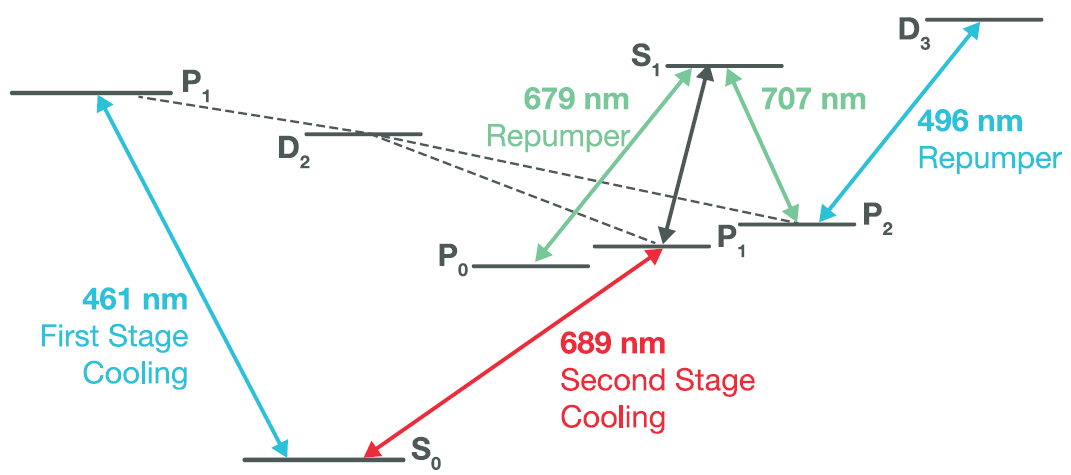
시스템의 큐비트 수를 확장하기 위한 개발 중인 계획에는 이온 트랩 배열을 이용하여 이온을 서로 다른 위치로 이동시키는 방법, 빛을 이용하여 광 신호로 정보를 전송하는 원격으로 얽힌 이온 사슬의 광자 네트워크를 통해 대규모 얽힘 상태를 구축하는 방법, 그리고 이러한 아이디어들을 조합하는 방법 등이 포함됩니다. 이러한 이유로 이온 트랩 방식은 대규모의 실용적인 양자 컴퓨터를 구현하는 데 유망한 방법으로 여겨집니다.
실리콘 양자점
양자 컴퓨터를 초기화하는 또 다른 방법은 실리콘 양자점을 이용하는 것입니다. 양자점은 크기가 매우 작아 일반적인 입자와는 다른 전자적 특성을 지닌 반도체 나노입자입니다. 양자점의 전기적 특성은 양자역학의 법칙을 따르며, 여러 개의 양자점을 쌍으로 연결하면 하나의 큐비트로 사용할 수 있습니다.
이러한 실리콘 큐비트는 하나 또는 몇 개의 전자를 저장할 수 있습니다. 큐비트가 1 상태인지 0 상태인지 판단하기 위해 전자의 스핀을 측정합니다. 많은 원소들이 고유한 핵 스핀을 가지고 있어 전자의 스핀을 읽고 조작하는 데 방해가 되기 때문에, 대부분의 양자점은 자연적으로 스핀이 없는 동위원소인 실리콘-28로 만들어집니다. 마이크로파를 순간적으로 방출하여 전자의 스핀을 반전시킵니다.
실리콘 양자점은 기존 방식보다 높은 온도에서 작동하며 트랜지스터와 유사한 크기를 가집니다. 1켈빈 이상의 고온에서 작동하고 트랜지스터와 비슷한 방식으로 제작되기 때문에 케이블 연결 없이 여러 개를 한데 모아 배치할 수 있으며, 컴퓨터 칩과 동일한 기술을 사용할 가능성도 있습니다. 이러한 장점들 덕분에 실리콘 양자점 방식은 높은 큐비트 수를 가진 양자 컴퓨터를 구현하는 데 실현 가능한 접근법으로 여겨집니다.
초전도 회로
양자 컴퓨터 개발에 가장 널리 사용되고 성공적인 접근 방식 중 하나는 초전도 전기 회로를 이용하는 것입니다. 구글, IBM, 그리고 리게티 컴퓨팅(Rigetti Computing)을 비롯한 여러 유명 스타트업들이 이 방식을 채택했습니다. 초전도 회로는 LC 탱크 회로와 유사하게 특별히 설계된 마이크로파 공진기입니다. 밀리켈빈 온도까지 냉각되면 이 회로는 양자 역학적 특성을 나타내어 훌륭한 큐비트가 됩니다.
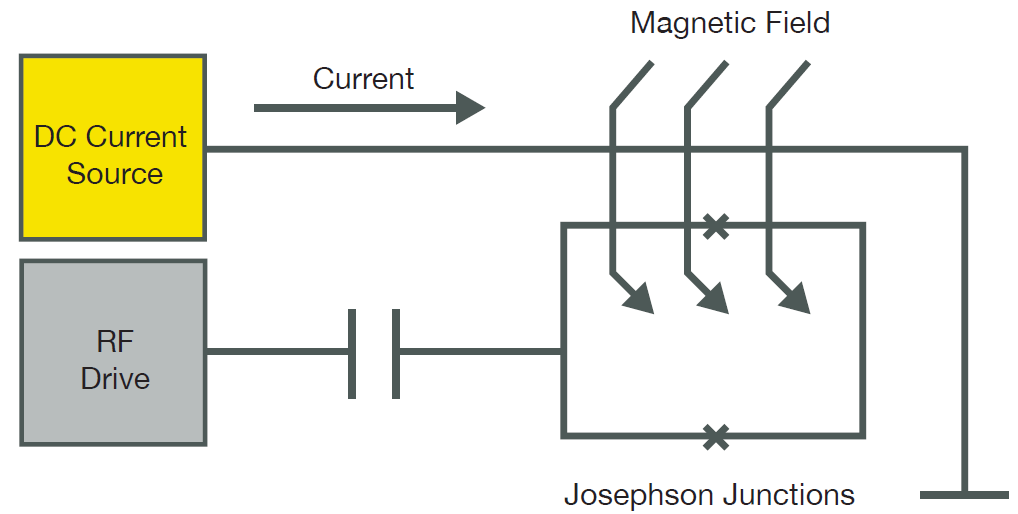
초전도 회로는 마이크로파 펄스와 직류 바이어싱을 이용하여 조작할 수 있습니다. 이러한 회로는 공진 주파수가 회로를 통과하는 자기 플럭스에 크게 의존하도록 설계되어 있습니다 (직류 전류원이 이 자기 플럭스를 조절합니다).
이러한 회로는 큐비트마다 다른 특정 주파수에 고정될 수 있도록 주파수 조정이 가능해야 합니다. 양자화된 에너지 레벨이 원활하게 변환될 수 있도록 자기장을 정밀하게 조정해야 하는데, 이는 양자 컴퓨터를 초기화하는 데 매우 중요합니다.
설치 및 계측
양자 실험용 장비에는 일반적으로 직류 전류원, 무선 주파수 자극, 그리고 벡터 네트워크 분석기, 임의 파형 발생기, 스펙트럼 분석기, 필터 및 증폭기를 포함한 1~10GHz 범위의 마이크로파 엔지니어링 도구가 포함됩니다.
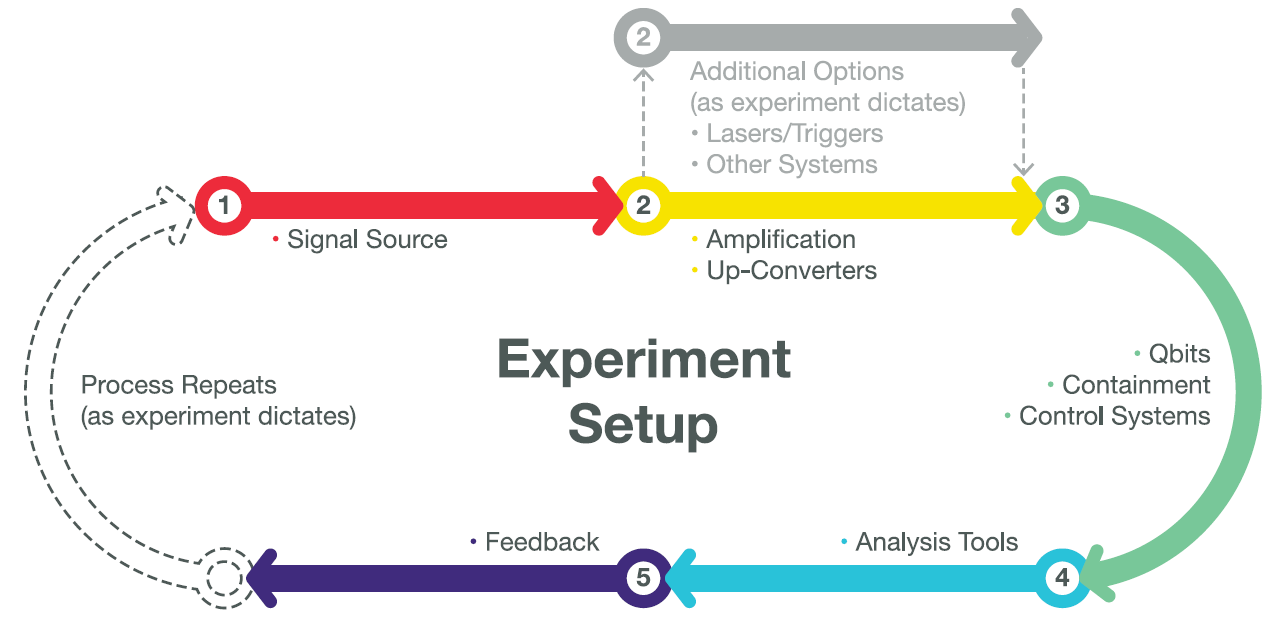
양자 컴퓨팅 실험의 일반적인 구성은 양자 임피던스(IQ)를 생성하는 기본 신호 소스와 그 뒤에 이어지는 증폭기 또는 업컨버터로 이루어집니다. 제어 시스템과 같은 다른 시스템 유형은 실험 종류에 따라 병렬로 작동될 수 있습니다. 이러한 양자 실험의 복잡성 때문에 다른 장치를 작동시키거나 활성화하는 디지털 채널도 필요할 수 있습니다. 이러한 실험은 일반적으로 극저온에서 수행되는데, 이는 신호 소스에 어려움을 초래하고 손실을 보정하기 위한 사전 왜곡 및 사전 보상 가능성을 야기합니다. 데이터를 분석하고, 조정하고, 실험을 여러 번 실행하기 위해서는 분석 도구와 피드백 메커니즘이 필요합니다.
도전 과제
초전도 회로, 특히 양자 컴퓨터를 만드는 데에는 여러 가지 어려움이 있습니다. 이러한 회로는 CMOS(상보형 금속 산화물 반도체) 소자와 동일한 방식으로 제작되므로 비교적 간단합니다. 따라서 이러한 회로를 하나의 칩에 많이 인쇄하여 다중 큐비트 시스템을 구축하는 것은 용이합니다. 하지만 각 회로를 개별적으로 제어하여 특정 회로들 간의 통신을 원활하게 하고, 원치 않는 회로들 간의 간섭을 방지하며, 각 회로의 수명을 확보하는 것이 관건입니다.
큐비트 수와 양자 실험 규모가 커짐에 따라 더 많은 어려움이 발생합니다. 예를 들어, 채널 수가 증가하면 더 크고 추가적인 장비가 필요합니다. 각 큐비트는 여러 개의 독립적인 신호를 필요로 하며, 각 신호는 자체적인 업컨버전, 사전 왜곡 및 신호 조정을 거쳐야 할 수 있습니다. 이는 각 신호에 필요한 케이블링과 관련하여 지연, 복잡하게 얽힌 배선, 특성 분석의 어려움, 손실 등의 문제를 야기합니다. 또한 정확한 결과를 얻기 위해서는 타이밍이 매우 중요하므로 이러한 채널들은 동기화가 필수적입니다.
환경적인 문제도 고려해야 합니다. 초전도 회로는 아주 작은 변화에도 매우 민감하기 때문에 열적, 기계적, 전기적 절연이 필요하며 0켈빈보다 약간 높은 온도를 유지해야 합니다. 이는 복잡한 냉각 시스템을 요구하며 이러한 실험에 필요한 장비를 설치하는 것을 더욱 어렵게 만듭니다.
솔루션
직류 전류원
큐비트는 자기장 변화에 민감한 비선형 조셉슨 접합으로 구성됩니다. 직류 전류원에서 흐르는 미세한 전류가 자기장을 생성하고 미세하게 조절하기 때문에 직류 전류원은 초전도 회로 실험에서 매우 중요한 역할을 합니다.
직류 전류원은 매우 안정적이고 잡음이 적어야 합니다. 전류가 변동하거나 잡음이 너무 크면 주파수가 전류 값에 의존하기 때문에 실험에 영향을 미칩니다.
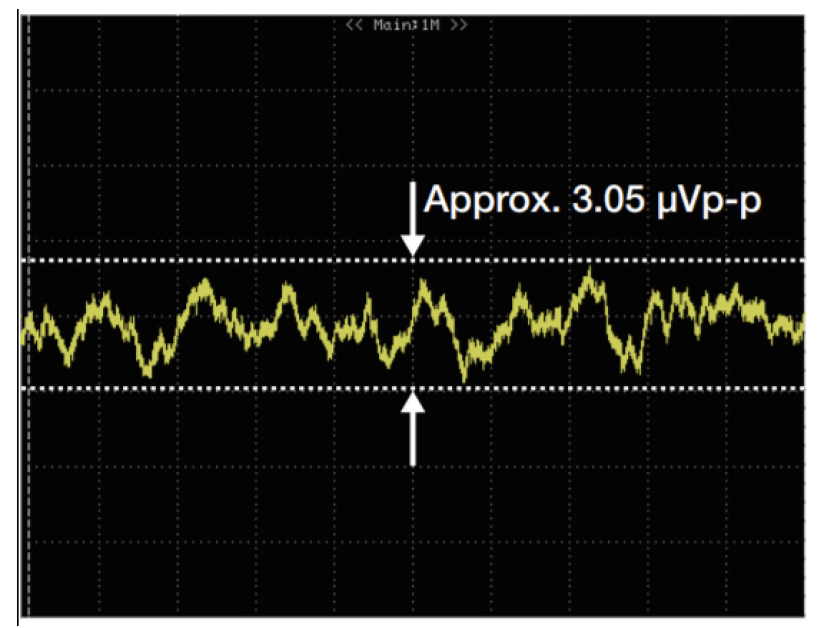
주파수 변동이 발생하면 자기장 잡음이 증가하여 공진기의 수명이 단축됩니다. 전원 공급 장치가 불안정하면 주파수 드리프트가 발생하고 장치의 품질이 저하됩니다.
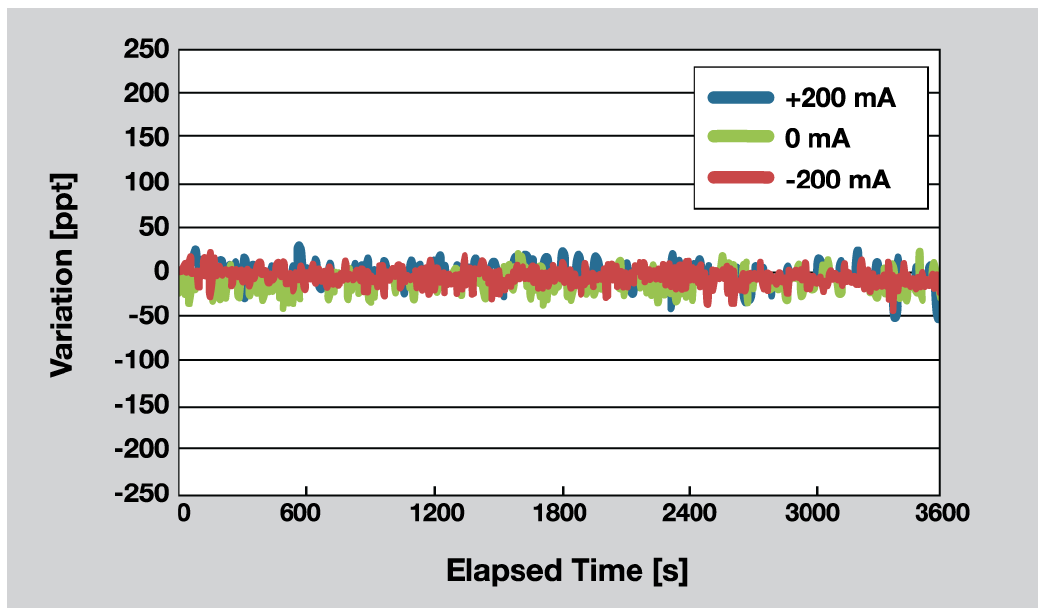
앞서 언급한 공간 및 채널 수 제약 때문에 소형이고 가격이 적당하며 여러 장치와 동기화가 가능한 DC 전원을 찾는 것이 중요합니다. 하지만 고품질 실험을 위해서는 잡음 및 안정성 사양이 전원 선택에 있어 가장 중요한 요소입니다.
광 스펙트럼 분석기
이온 트랩 방식의 양자 컴퓨팅은 냉각, 재펌핑, 포획, 게이팅 및 판독에 다양한 파장의 레이저를 사용합니다. 이러한 각 단계에는 정확한 레이저 파장이 필요합니다. 광 스펙트럼 분석기는 지정된 파장 범위에 걸쳐 전력 분포를 표시하고, 레이저가 올바른 파장으로 조정되었는지 측정하여 큐비트의 품질을 유지합니다.
결론
초전도 회로 방식이 양자 컴퓨터 구현에 가장 널리 사용되는 방법이지만, 이온 트랩과 실리콘 양자점 방식에도 각각의 장점과 타당성이 있습니다. 이러한 모든 방식에는 여전히 많은 과제가 남아 있는데, 가장 큰 과제는 큐비트의 무결성을 유지하면서 큐비트 수를 늘리고 장비가 차지하는 공간을 최소화하는 것입니다. 하지만 잠재적 이점이 크기 때문에 연구자들은 이러한 난관을 극복하고 양자 컴퓨터를 신속하게 상용화할 수 있는 최적의 방식을 찾기 위해 노력하고 있습니다.
Introduction
A new type of computer based on the theory of quantum mechanics, a quantum computer, is currently in development by researchers around the globe. The theory of quantum mechanics describes nature at the atomic and subatomic level. Quantum technology has the potential to build powerful tools that process information using the properties of atoms, photons, and electrons. These quantum computers could also address challenges of much greater complexity than what today's computers can solve, and help further advancements in science, technology, medicine, and more.
With countries spending billions of dollars, the race for who can produce the first practical, commercialized quantum computer is on. There are currently several approaches to build this sort of computer, and this all begins with creating and initializing quantum bits, also known as qubits.
What is a Qubit?
A qubit is the basic unit of quantum information, similar to how the bit is the basic unit of information in classical computing. The difference here is that bits only exist in a state of 0 or 1, while a qubit can exist in a combination of all possible states. Known as superposition, this means that any two or more quantum states can be added together and result in another quantum state.
There are many competing hardware approaches to quantum computing, with the three most common being ion trap, silicon quantum dot, and superconducting circuit. This white paper introduces all three, with a focus on superconducting circuits.
Approaches to Quantum Computing
Ion Trap
One way to devise a large-scale quantum computer is with the trapped ion approach. Ions are electrically charged atomic particles that can be suspended in free space using electromagnetic fields, with the qubits stored in the electronic states of each ion. Because of the stability of the electronic states, quantum information passes through the collective quantized motion of the ions in a shared trap.
Qubits initialize through a process called optical pumping, when light raises electrons from a lower energy level in an atom or molecule to a higher one. During this process, a laser couples an ion to excited states that will eventually decay to one state that is not coupled to the laser. For a single qubit, lasers induce coupling between internal qubit states. For entanglement between qubits, lasers are applied between the qubit states and external motional states.
These lasers must be at precise wavelengths to match the resonance frequency of the atom. For this to occur, two laser technologies are needed. The first cools and reduces the kinetic energy at a fixed trap condition and atom number, while the second repumps when the atom decays to the wrong ground state. For this process, there are eight total laser wavelengths used for cooling, trapping, gating, and readout. An optical spectrum analyzer measures the amplified spontaneous emission background after amplification of the laser source.

Plans in development for scaling the number of qubits in the system include transporting ions in an array of ion traps to distinct locations, building large, entangled states from photonic networks of remotely entangled ion chains that transmit information as optical signals using light, and combinations of these ideas. Because of this, the ion trap method shows promise in the actualization of a large-scale, usable quantum computer.
Silicon Quantum Dot
Another method of initializing a quantum computer is through the use of silicon quantum dots. Quantum dots are semiconductor nanoparticles that are so small their electronic properties differ from larger particles. Their electrical properties are governed by quantum mechanics, and when paired, quantum dots can be used as a single qubit.
These silicon qubits can hold one or a few electrons. To determine whether the qubit is in a 1 or 0 state, the spin of electrons is measured. Since many elements have an inherent nuclear spin which interferes with the ability to read and manipulate the spin of the electron, most quantum dots are made from silicon-28, a naturally spin-free isotope. A burst of microwaves is used to flip the spins.
Silicon quantum dots operate at higher temperatures than competing methods and are on the same size scale as transistors. Because temperatures are above one-degree kelvin and quantum dots are made in a similar way to transistor, they can be placed together with no cabling and may be able to use the same technology as computer chips. These advantages make the silicon quantum dot method a feasible approach to making a high qubit count quantum computer.
Superconducting Circuit
One of the most popular and successful approaches for developing a quantum computer uses superconducting electrical circuits. This approach has been adopted by Google, IBM, and several well-known startups including Rigetti Computing. Superconducting circuits are specially designed microwave resonators, similar to LC tank circuits. When cooled to millikelvin temperatures, these circuits exhibit quantum mechanical properties that make them great qubits.
Superconducting circuits can be manipulated with microwave pulses and DC biasing. They are designed such that their resonant frequencies are strongly dependent on the magnetic flux traveling through the circuit (DC current sources engineer this magnetic flux).
These circuits must be frequency-tunable to park at a specific frequency, which varies from qubit to qubit. The magnetic field requires fine-tuning so that quantized energy levels can smoothly transform, crucial for initializing a quantum computer.

Setup and Instrumentation
Instrumentation for quantum experiments often includes a DC current source, RF stimulus, and microwave engineering tools in the 1-10 GHz range including vector network analyzers, arbitrary waveform generators, spectrum analyzers, filters, and amplifiers.

The typical setup for quantum computing experiments includes a base signal source to generate IQ, followed by an amplifier or up-converter. Other system types, like a control system, can run in parallel, depending on the experiment of choice. Because of the complexity of these quantum experiments, digital channels that trigger or activate other devices may also be needed. These sorts of experiments are typically undertaken at cryogenic temperatures, which often begets challenges for the signal source and triggers the potential for predistortion and pre-compensation to adjust for losses. Analysis tools and feedback mechanisms are needed to analyze data, make adjustments, and run the experiment multiple times.
Challenges
There are several challenges for superconducting circuits specifically and creating a quantum computer in general. These circuits are fabricated in the same way that complementary metal-oxide-semiconductor (CMOS) is fabricated, which is a straight-forward process. Therefore, it’s easy to print many of these circuits on a chip to create a many-qubit system. The challenge comes when one tries to control those individual circuits to ensure certain circuits talk to each other and avoid crosstalk between undesirable circuits, as well as ensure each circuit has a good lifetime.
As the number of qubits and quantum experiments grow, more challenges arise. For example, when channel counts increase, additional and larger equipment is necessary. Each qubit can require multiple independent signals, and each of those signals may require its own up-conversion, pre-distortion, and conditioning. This leads to further issues with the cabling required for each of these signals, such as delays, multiple tangled wires, difficulty in characterization, and losses. These channels also require synchronization, as timing is critical for accurate results.
Environmental challenges must also be considered. Because superconducting circuits are highly sensitive to even the smallest changes, they require thermal, mechanical, and electrical isolation and must be kept at slightly over zero degrees kelvin. This necessitates complex cooling systems and makes it more difficult to set up the instrumentation for these experiments.
Solutions
DC Current Source
Qubits are built up from non-linear Josephson junctions that are sensitive to changes in the magnetic field. A small current from a DC current source produces and fine-tunes that magnetic field, which makes the DC current source a critical part of superconducting circuit experiments.
It is critical that DC current sources be extremely stable and have low noise. If the current fluctuates or the noise is too high, the experiment is affected because of the frequency’s dependence on that current value.

When the frequency jitters, the magnetic field noise increases, which shortens the lifetime of the resonators. If the source isn’t stable, the frequency drifts and the quality of the device degrades.

Because of the previously mentioned challenges with space and channel count, it is important to find a DC source that is small, reasonably priced, and allows for synchronization with multiple units. However, the noise and stability specifications are still most important when selecting a source to ensure quality experiments.
Optical Spectrum Analyzers
The ion trap approach to quantum computing utilizes several lasers at varying wavelengths for cooling, repump, trapping, gating, and readout. Precise laser wavelengths are needed for each of these. An optical spectrum analyzer displays the power distribution over a specified wavelength span and measures and ensures the lasers are tuned to the correct wavelength so that the qubits maintain their quality.
Conclusion
While the superconducting circuit approach is the most widely used method for creating a quantum computer, there are arguments for and advantages to the ion trap and silicon quantum dot approaches as well. There are still many challenges in all these methods, with the primary one being how to scale the number of qubits up while maintaining the qubits integrity and limiting the amount of space taken up by instruments. But given the potential benefits, researchers are working to overcome these obstacles and determine the best approach to swiftly bring quantum computers to the market.
하단영역

한국요꼬가와전기(주)
사업자등록번호 102-81-17301
경기도 용인시 기흥구 기흥로 58-1 기흥 ICT밸리 SK V1 A동 407호 ~ 411호 (우) 16976 (분당선 기흥역 2번 출구 500m)
T&M 영업본부 : 02-2628-3813
서비스팀 :02-2628-3872
팩스 : 02-2628-3899
COPYRIGHT ⓒ 2024 YOKOGAWA ELECTRIC CORPORATION. ALL RIGHTS RESERVED.